Medical Disclaimer: This article provides general educational information and is not a substitute for diagnosis or individualized advice from a dentist or other qualified healthcare professional.
A dental crown can restore, reinforce, and protect a tooth that has been significantly weakened by decay, large fillings, or fractures. Often called a “cap,” a crown encases the visible portion of a prepared tooth above the gumline to restore full chewing function and appearance.
💡 Straight from the Dentist: The Bottom Line on Dental Crowns
“A crown is about structural survival, not just cosmetic repair. When a tooth loses more than half of its healthy structure to large fillings, fractures, or root canal therapy, continually patching it with larger fillings is a recipe for a catastrophic split down the root.
A crown acts like a protective helmet, holding the remaining tooth together under hundreds of pounds of daily chewing pressure. With modern materials like monolithic zirconia and lithium disilicate (e.max), we can achieve incredible fracture strength without sacrificing natural aesthetics.”
What Is a Dental Crown?
A dental crown is a custom-fabricated restoration designed to encase and protect a structurally compromised tooth.
Unlike a dental filling—which replaces a localized portion of missing tooth structure within the walls of a tooth—a full-coverage crown surrounds the prepared tooth above the gumline. This restores its anatomical shape, chewing strength, vertical dimension, and natural appearance.
Important Note: A crown does not make the underlying tooth structure immune to future problems. The natural root and tooth margin beneath the crown still require diligent oral hygiene to prevent recurrent decay, gum inflammation, or fractures.
According to clinical guidelines from the American Dental Association (ADA), crowns are commonly indicated to:
- Strengthen teeth with large, failing restorations when insufficient healthy enamel remains
- Protect cracked, worn, or structurally compromised teeth
- Restore fractured teeth to proper function
- Seal and protect posterior teeth following root canal treatment
- Support multi-unit dental bridges
- Serve as the functional tooth atop a dental implant
Why Might You Need a Dental Crown?
A dentist may recommend a crown in several clinical situations:
- Large Fillings with Limited Tooth Structure: When a cavity or previous filling leaves thin, unsupported enamel walls at high risk of breaking.
- Fractured, Cracked, or Heavily Worn Teeth: Teeth exhibiting cracked tooth syndrome or severe attritional/erosive wear.
- Deep or Extensive Decay: Cavities that compromise multiple tooth surfaces.
- Post-Endodontic Protection: Teeth (especially molars and premolars) that require full cuspal coverage after root canal therapy.
- Cosmetic Improvements: Significant discoloration, malformation, or structural asymmetries when conservative options are insufficient.
- Bridge Abutments & Dental Implants: Anchoring a dental bridge or completing an implant restoration.
Not every damaged tooth requires a full crown. Depending on the remaining healthy tooth structure, more conservative restorations like direct composite fillings, inlays, or onlays may be appropriate.
💡 A Note from the Dentist: When to Choose a Crown vs. an Onlay
In modern dentistry, preserving natural tooth structure is always our top priority. However, conservation must be balanced against mechanical protection.
An onlay (partial crown) is fantastic when sound cusps remain. But if an onlay leaves thin enamel walls exposed to heavy chewing forces, clenching, or deep structural cracks, the tooth remains at an unacceptable risk of catastrophic fracture down the root.
The goal is not simply to pick the most conservative restoration on paper—it is to preserve as much healthy structure as possible while ensuring the tooth has enough 360-degree protection to survive decades of heavy chewing.
Do All Root-Canal-Treated Teeth Need Crowns?
The short answer is no.
A common misconception is that receiving a root canal automatically mandates a crown. In reality, the need for a crown depends on the tooth’s position, remaining structure, and functional forces:
- Back Teeth (Molars & Premolars): These teeth endure heavy vertical and lateral crushing forces during chewing. Root canal therapy removes internal hydration and tissue, leaving weakened structural walls. Molars almost always require a full-coverage crown or cuspal protection to prevent vertical splits.
- Front Teeth (Incisors & Canines): Front teeth experience shearing forces rather than heavy crushing loads. If the access opening is small and sufficient natural enamel remains intact, a front tooth can often be safely restored with a conservative composite resin filling alone.
Types of Dental Crown Materials
Modern restorative dentistry offers multiple advanced materials. No single material is universally “best” for every clinical situation; selection depends on bite forces, aesthetic demands, available space, opposing teeth, and clenching/grinding habits.
| Material Type | Primary Advantages | Aesthetic Level | Best Clinical Indications |
|---|---|---|---|
| Zirconia (Monolithic) | Exceptional fracture strength, biocompatible, conservative tooth preparation | High (Modern Translucent Zirconia) | Molars, heavy chewers, patients who grind/clench |
| Lithium Disilicate (e.max) | Unmatched natural translucency, high bonding strength | Superior (Lifelike) | Front teeth, premolars, highly visible aesthetic areas |
| Porcelain-Fused-to-Metal (PFM) | Proven long-term clinical history, reliable strength | Good | Molars, multi-unit long-span bridges |
| Cast Gold / Metal Alloy | Exceptional longevity, kindest to opposing teeth, minimal tooth removal needed | Metallic (Non-tooth colored) | Second molars, tight restorative spaces, extreme bruxism |
1. Zirconia Crowns
Zirconia (zirconium dioxide) is an ultra-durable ceramic material. Modern zirconia crowns can be fabricated as monolithic zirconia (milled from a solid block of high-strength ceramic) or as a strong zirconia coping layered with aesthetic veneering porcelain.
Zirconia is the premier choice when fracture resistance and structural strength are the primary clinical goals.
2. Lithium Disilicate Crowns (e.g., IPS e.max)
Lithium disilicate is a glass-ceramic renowned for its optical properties. It matches the natural translucency, light transmission, and depth of real enamel better than almost any other material, while providing ample strength for anterior and premolar restorations.
💡 A Note from the Dentist: Zirconia vs. Lithium Disilicate
When selecting an all-ceramic crown, I weigh functional bite demands against aesthetic expectations:
- For posterior molars or patients who clench/grind: Monolithic zirconia is my go-to choice because its flexural strength is nearly indestructible under heavy mastication.
- For visible front teeth: Lithium disilicate is often superior because of its natural, lifelike optical depth and translucency.
The material with the highest raw strength number is not automatically the right choice for every tooth. True restorative success comes from balancing strength, margin fit, and cosmetic harmony for each patient.
3. Porcelain-Fused-to-Metal (PFM) Crowns
PFM restorations combine a cast metal substructure with an outer layer of tooth-colored porcelain. They have decades of clinical research behind them and provide predictable strength.
However, they allow less natural light transmission, and a thin gray metallic line can sometimes become visible along the gumline if the tissue recedes over time.
4. Gold and Metal Alloy Crowns
Cast gold remains one of the gold standards of restorative dentistry from a mechanical standpoint. Gold alloys require the least amount of tooth structure removal, cause virtually zero abrasive wear to the opposing natural teeth, and rarely chip or fracture.
Their metallic appearance is their only major drawback, reserving them primarily for upper second molars or patients prioritizing maximum longevity over aesthetics.
Traditional Lab-Made Crowns vs. Same-Day CAD/CAM Crowns
- Traditional Laboratory Workflow: The tooth is prepared, an impression or digital scan is captured, a temporary crown is placed, and a specialized dental laboratory fabricates the custom crown over 1 to 2 weeks. The permanent crown is evaluated and cemented at a second appointment.
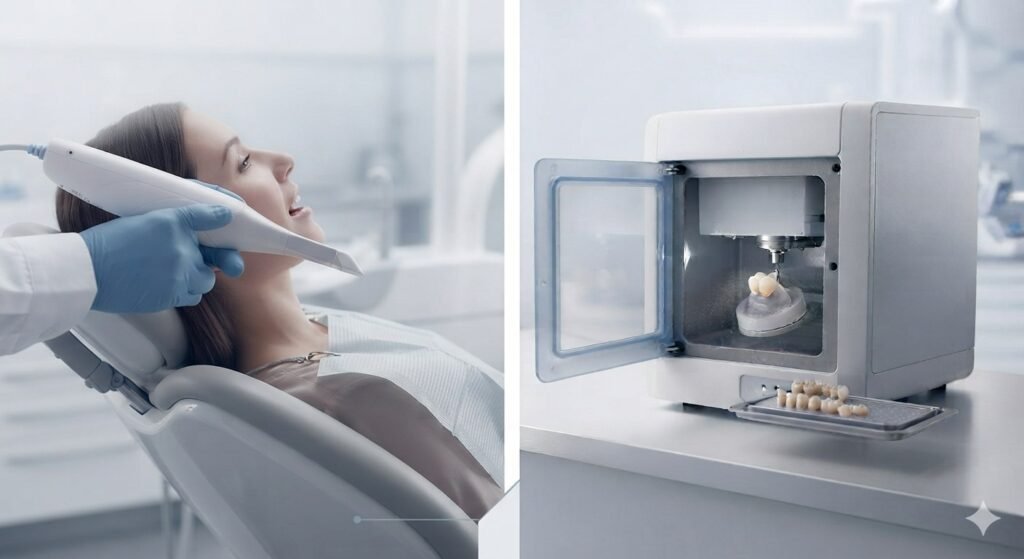
- Same-Day (Chairside CAD/CAM) Workflow: Using in-office optical scanners and milling machines (such as CEREC), the crown is digitally designed, milled from a solid ceramic block, glazed/crystallized in an in-office oven, and permanently bonded in a single 2-hour appointment.
Neither method is universally superior. Laboratory-fabricated crowns allow master dental technicians to hand-layer custom shades for complex front-tooth cases, whereas chairside CAD/CAM provides convenience of the same-day crown delivery and can eliminate the need for temporary restorations in some cases.
What Happens During a Dental Crown Procedure? (Step-by-Step)
- Clinical Assessment & Diagnosis: The dentist evaluates bone levels, root anatomy, and pulp health with digital radiographs.
- Local Anesthesia: The tooth and surrounding gum tissue are thoroughly numbed for complete comfort.
- Tooth Preparation (Shaping): The dentist gently removes decay and reshapes the outer enamel and dentin to create space for the crown material while maintaining an optimal taper for retention.
- Impression or Digital Optical Scan: A high-precision digital intraoral scan or silicone impression records the prepared tooth, adjacent contacts, and opposing bite.
- Temporary Crown Placement: If using a laboratory workflow, an acrylic or composite temporary crown is cemented with temporary cement to protect the tooth and maintain spacing.
- Final Fitting & Delivery: At the delivery visit, the permanent crown is checked for marginal fit, interproximal contacts, aesthetic shade match, and bite harmony before being permanently bonded or cemented.
Does Getting a Dental Crown Hurt?
The procedure is comfortable:
- During the Appointment: Local anesthesia ensures you do not feel sharp sensations. You will only feel gentle water spray, vibration, and light pressure.
- After the Appointment: Mild gum tenderness around the margin or temporary sensitivity to cold foods is normal for a few days. Over-the-counter pain relievers (such as ibuprofen or acetaminophen) readily resolve post-treatment soreness.
How Much Does a Dental Crown Cost?
Crown fees depend on several practical and clinical factors:
- Restorative Material: Monolithic zirconia, custom layered e.max, PFM, or high-noble cast gold.
- Tooth Complexity & Position: Anterior aesthetic cases requiring custom laboratory shade matching vs. posterior teeth.
- Supporting Foundations: Whether the tooth requires an adjunct core buildup, post-and-core, or gingival contouring.
- Insurance Coverage: Most dental benefit plans classify crowns as a “Major Restorative” benefit, typically covering 50% of the allowable fee up to annual maximums.
How Long Does a Dental Crown Last?
With appropriate oral care and routine professional hygiene checkups, a dental crown can last many years although there can be an early failure through a trauma and/or fracture to a crown (tip: many dental insurance companies in the U.S. have a usual crown replacement policy of every 5 years).
💡 A Note from the Dentist: Does a Crown Last Forever?
I often tell my patients: “Nothing in this world lasts forever—and dental crowns are no exception.”
While the crown material itself (especially zirconia or gold) is virtually indestructible, the living tooth structure supporting it is still susceptible to plaque, gum recession, and recurrent decay.
Rather than asking “How many years will this crown last?”, the better clinical question is: “What daily habits will give this tooth and crown the best chance to last a lifetime?” Excellent interdental flossing, using a nightguard if you clench/grind, and routine checkups make all the difference.
Can You Get a Cavity Under a Crown?
Yes.
While the porcelain or zirconia material cannot decay, the natural tooth underneath and along the margin can.
Bacteria and plaque accumulate along the microscopic margin where the crown meets the natural tooth root. If plaque is left undisturbed, recurrent decay will undermine the restoration beneath the crown, often requiring the crown to be cut off and replaced.
Why Do Crowns Sometimes Fail or Come Off?
A crown may require attention due to:
- Recurrent Marginal Decay: Cavities forming along the exposed root/margin.
- Cement Washout / Loss of Retention: Breakdown of the adhesive bond over time.
- Structural Tooth Fracture: Fractures occurring within the natural tooth root beneath the crown.
- Excessive Occlusal Forces / Grinding (Bruxism): Unmanaged night grinding causing ceramic chipping.
What to Do If a Crown Comes Loose:
- Call your dental clinic promptly to schedule an evaluation.
- Keep the crown safe in a clean container (do not throw it away).
- Avoid chewing on that side of your mouth.
- Do not use household superglue or permanent glues. If needed for comfort, temporary over-the-counter dental cement can hold it in place temporarily until your dentist evaluates the tooth for underlying issues.
Frequently Asked Questions
Is a crown better than a filling?
Neither is “better”—they serve different structural purposes. Small to moderate cavities are best treated conservatively with fillings. Once a tooth loses more than 50% of its healthy structure, a crown is required to distribute bite forces and prevent the tooth from splitting.
Is a crown the same as a “cap”?
Yes. “Cap” is simply the traditional colloquial term for a full-coverage dental crown.
Can you floss around a dental crown?
Yes, and daily flossing is essential. Slide the floss gently between the teeth down to the gumline and pull it against the tooth surface to clear plaque from the margins.
Sources & References
- American Dental Association (ADA) — MouthHealthy: Dental Crowns and Restorative Guidelines.
- Journal of Prosthetic Dentistry: Long-Term Survival Rates of Monolithic Zirconia and All-Ceramic Restorations.
- Journal of Dentistry: Systematic Reviews of Tooth-Supported CAD/CAM and Laboratory Ceramic Restorations.
- American Association of Endodontists (AAE): Restoration of Endodontically Treated Teeth.